
Alonzo’s Album
1934-1936
More About Alonzo Pond
Alonzo W. Pond (1894–1986) was a well-known, highly respected American archaeologist and speleogist.
Alonzo was born in 1984 in Janesville, WI, received a Bachelor of Science degree from Beloit College in 1920, and a master’s degree in Anthropology from the University of Chicago in 1928.
Pond was the camp Superintendent with CCC Company 633 from 1935 until December 1937. His expertise was instrumental in the successful archeological discovery of bison bones at Interstate Park.
He held various positions throughout his life: professor, field archaeologist in Algeria, project supervisor for the National Park Service and the Civilian Conservation Corp, Manager at Cave of the Mounds (Wisconsin), editorial research specialist with the U.S. Airforce, author of five books, founded Wisconsin Gardens (a guided tour of the variety of northern Wisconsin terrain) and was Camp Superintendent with the CCC at both Wisconsin Interstate and Devil’s Lake State Parks.
Between 1934 and 1936, Pond directed the Civilian Conservation Corps excavations of colonial Jamestown, as well as CCC Trail building at Interstate and Devil’s Lake State Parks.
During the 1930’s and 1940’s he also lectured to schools and colleges throughout the United States, sharing his experiences as an anthropologist and archaeologist. Pond had a keen interest in explaining the world around him to others. He was a rather small man with leather boots laced almost to his knees, but what a giant of a man in
energy and intellectual capacity. He was highly respected in his field of study. He died on December 25, 1986, at the age of 92. He is buried in Janesville, Wisconsin.
His guidebook, “Interstate Park and Dalles of the St. Croix” was published in 1937. The book is based on his knowledge of the history, geology, archaeology and wildlife of the region. The book certainly adds to the visitors’ enjoyment of our area today. We invite you to look for a copy at our gift shop in the Ice Age Center at Interstate.

Alonzo Pond
Alonzo Pond on recently completed stairs of the Pothole Trail. (1935)

Trail Building
Another view showing the teamwork required to move large boulders from the planned trail.

Reviewing Plans
A CCC crew reviews project plans on site.

Moving Rocks
A team uses the tools of the day to move a large boulder for a trail in the Echo Canyon and Summit Rock area.

Moving Rocks
A crew working as a team to move rocks for a park trail near the river.

Trail Building
The CCC crew moving rocks and gravel as part of a trail development project.
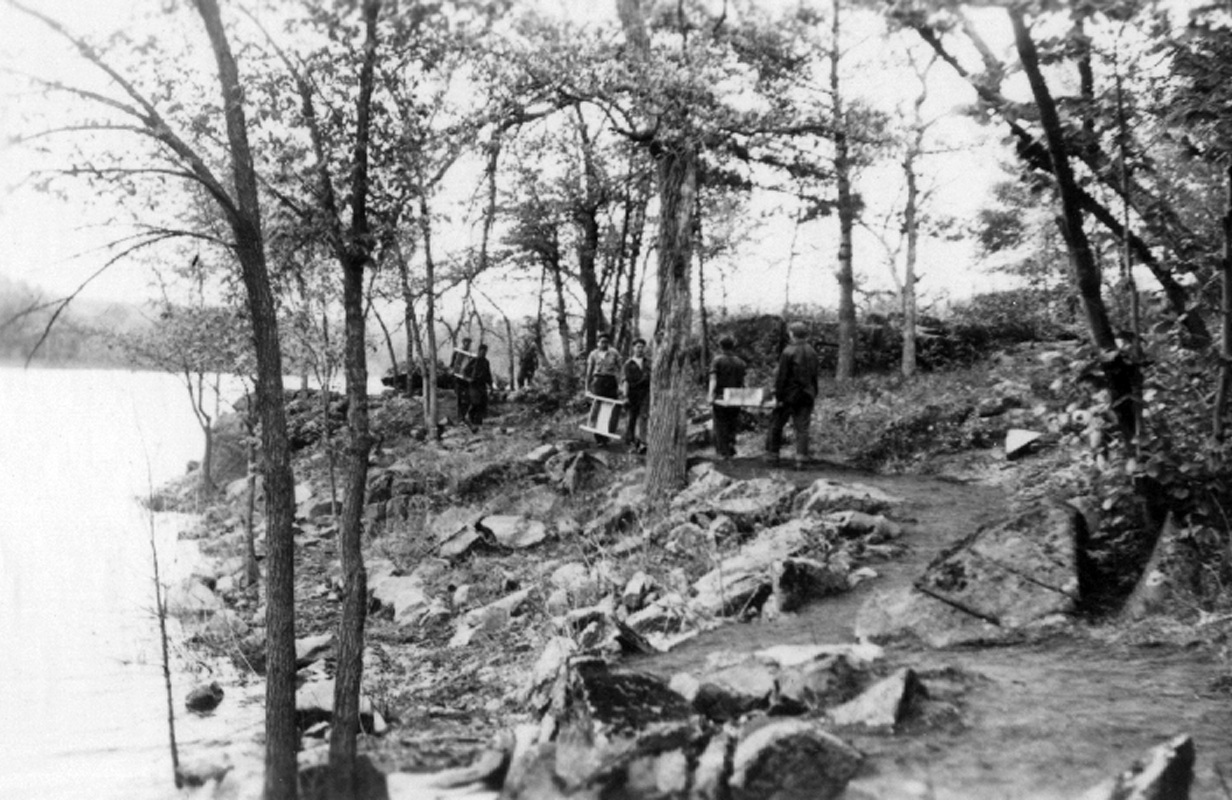
Barrows Trail Building
The men of the CCC using barrows to move stone and gravel along what would become the Lake o’ the Dalles Trail.

Moving Rocks for Trails
CCC workers using levers to move rocks for a trail.

Road Snow Removal
An early plow system clears the park road to the CCC Camp. (1936)

Snow Removal
Men clearing snow to reach their next area for trail building.

Snow!
Large snow drifts in the rocky bluffs of the St. Croix River.

Stone Steps on a Trail
Stone steps built along a park trail that was retired for safety decades ago.

Fire and Ice
Large rocks were split by dousing them with water, after they had been heated with fire.

Trail Building Crew
A crew working on a trail near the river pause for a quick break.

Breaking Rocks
CCC workers using the tools of the day to split larger rocks into pieces that would later be used for a number of buildings around the park.

Rock Retaining Wall
Early work on the rock retaining wall along the park road. (1935)

Park Road Work
More ditching work along the park road. A completed rock barrier wall to the right.

Collision Curve
A view of ‘Collision Curve’ from the area of the Pothole Trail.
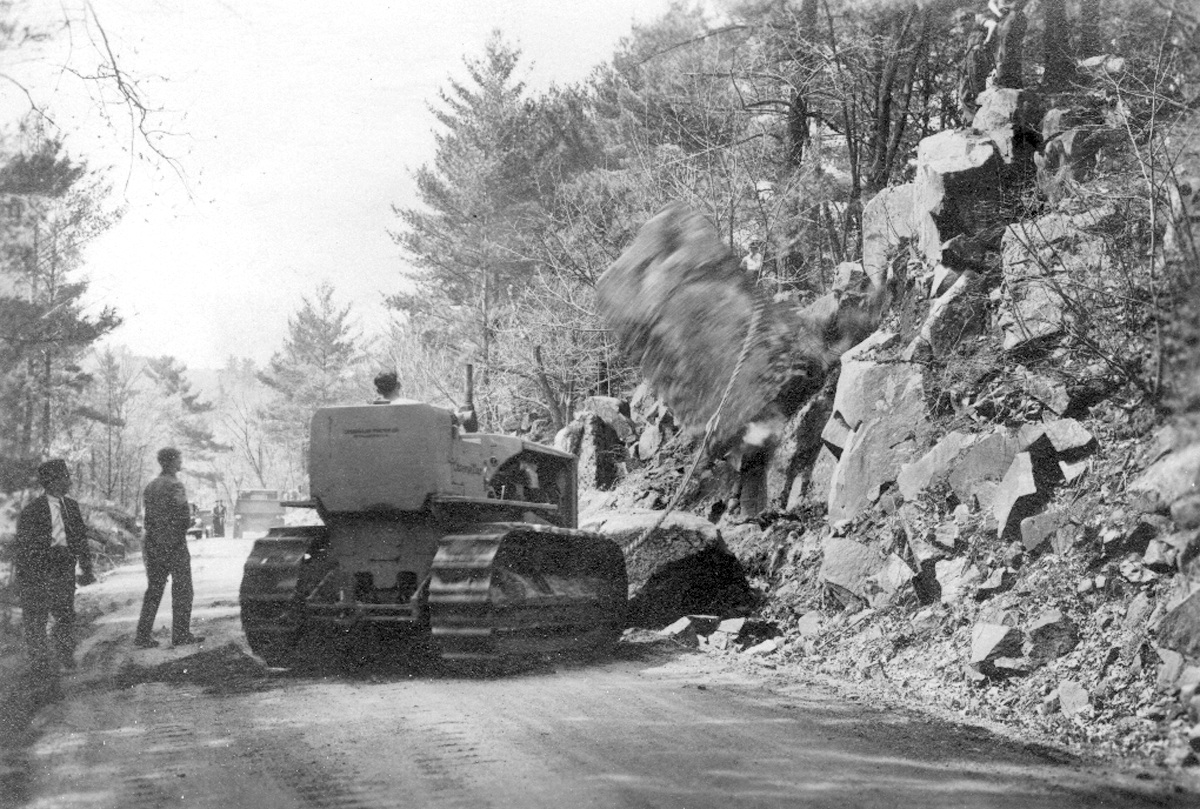
Bulldozer Moves Rock
An early bulldozer was used to remove dangerous rocks perched above the park road.
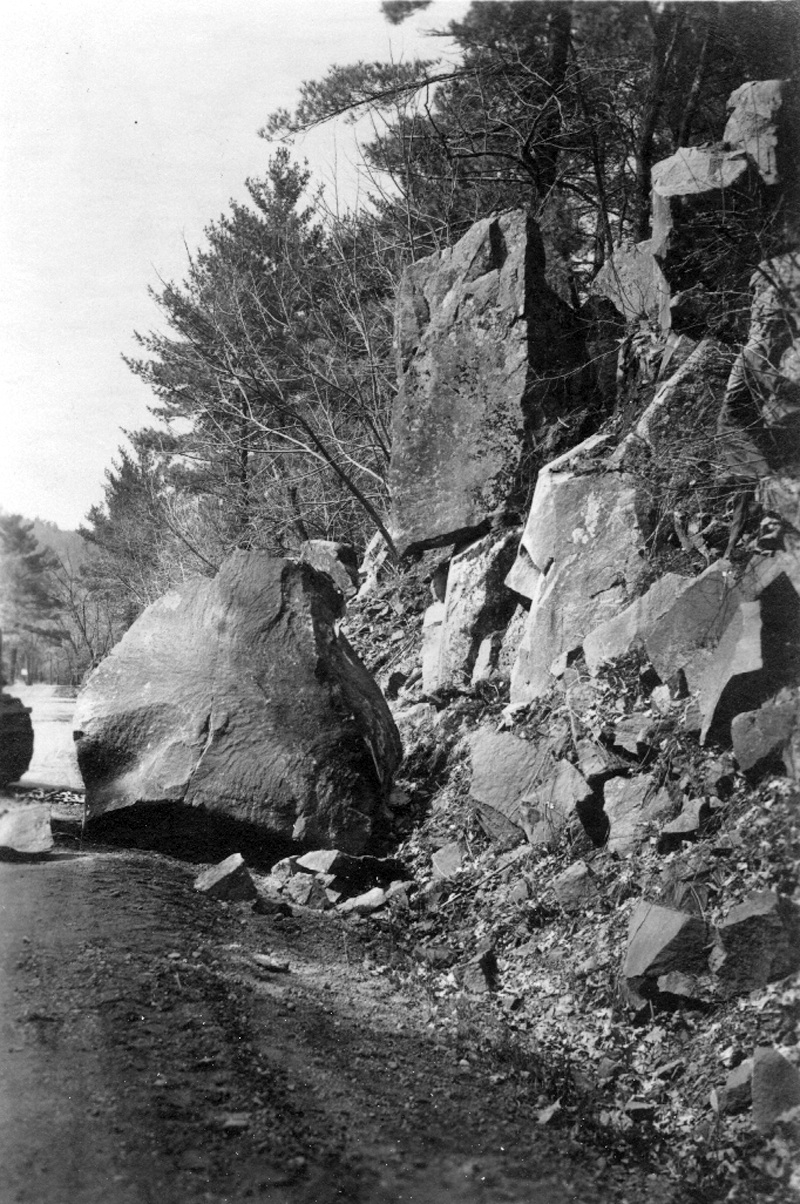
Dangerous Rocks
As the park road was developed, dangerous rocks ‘hanging’ above the road needed to be moved for safety.

Old Man of the Dalles
Old Man of the Dalles. (1934)